
The Distinction Matters: This isn’t anti-inflammation. It’s the absence of unnecessary inflammation — because the upstream trigger was managed before it could escalate.
Why This Explains So Much
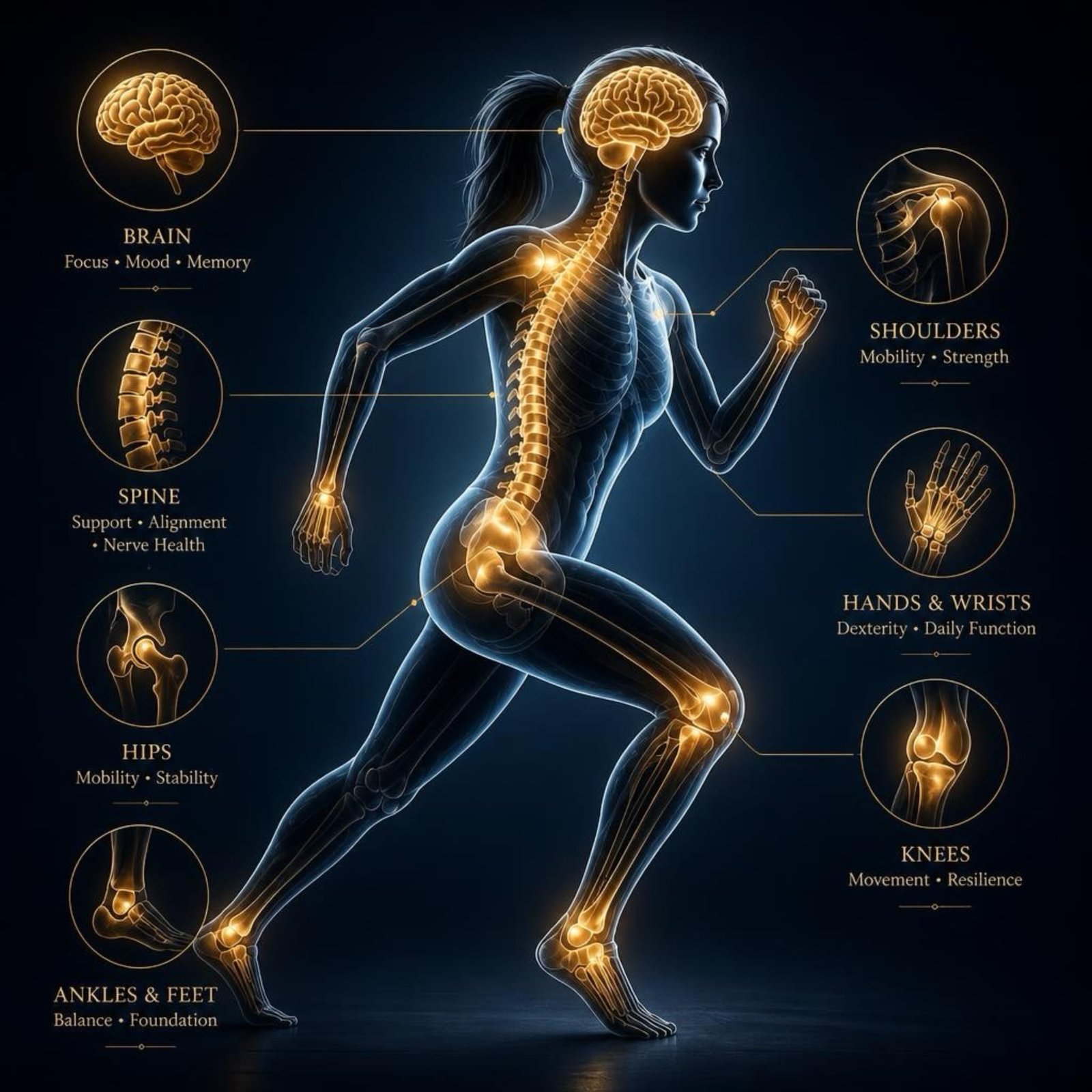
One of the most striking observations reported by people who support their cellular health through redox signaling is that improvements in comfort tend to be broad — not limited to one specific area or type of discomfort, but felt across different body parts and different kinds of pain. From a biological standpoint, this makes complete sense. If inflammation is the common root across all types of pain, and if redox signaling addresses inflammation at its source, then improvements wouldn’t be expected to be localized — they would show up wherever inflammation had been at work. becomes normal.
A New Way to Think About Pain
Understanding pain through the lens of inflammation — and inflammation through the lens of cellular redox biology — shifts the entire conversation. Instead of asking “how do I stop this pain?” we start asking “what is my body trying to tell me, and what does it need to restore balance?”
The body isn’t broken. In most cases, it’s doing exactly what it was designed to do — responding to a cellular environment that has become imbalanced. Support the cellular environment, and the body has a remarkable capacity to regulate itself.
That’s the promise of understanding redox biology — not a shortcut, but a more intelligent starting point.
This article is based on principles in redox biology and cellular health research. For supporting science, see: PMC2771434 (National Center for Biotechnology Inf )
Why Your Body Hurts: The Hidden Connection Between Inflammation and Cellular Health
Understanding pain at its root — and what science says about addressing it upstream
Pain is one of the most common and costly health challenges facing people today. In the United States alone, roughly 51 million people— about one in five — live with chronic pain. The financial burden is staggering: nearly $20 billion is spent every year on prescription pain medications, and that figure doesn’t even account for over-the-counter drugs or the broader economic impact of lost productivity and reduced quality of life.
But despite how common pain is, most of us have never been taught what actually causes it at the biological level. We treat symptoms. We manage discomfort. We rarely ask: where does this begin?
The answer, according to a growing body of research, points to one core process: inflammation.
Inflammation: The Common Thread in All Pain
It doesn’t matter whether the pain is acute or chronic, sharp or dull, burning or numbness — the underlying biological mechanism is the same. Inflammation drives all of it. Pain receptors get activated, pain signals travel through the nervous system, and over time the brain can even become sensitized to pain in a way that amplifies the experience. All of these are expressions of the same inflammatory process playing out at different stages.
This is a significant reframe. Most people think of inflammation as something that happens when you sprain an ankle or get a cut — visible swelling, redness, heat. But inflammation is also a cellular event, one that can simmer quietly for years, affecting nerves, tissues, and organs before it ever becomes something you consciously notice.
“Irrespective of the type of pain — whether acute or chronic, peripheral or central, nociceptive or neuropathic — the underlying origin is inflammation and the inflammatory response.”
– Research on pain and inflammation pathways
Going Upstream: What Triggers Inflammation in the First Place?
If inflammation is the origin of pain, the next logical question is: what triggers inflammation? This is where cellular biology becomes essential.
At the cellular level, inflammation is largely regulated by a molecule called NF-kB — a transcription factor that essentially acts as an “on switch” for the inflammatory process. When oxidative stress builds up inside a cell (damage caused by an imbalance between harmful free radicals and the body’s ability to neutralize them), NF-kB gets activated, triggering the release of inflammatory compounds throughout the body.
This is why reducing oxidative stress isn’t just about protecting cells from damage — it’s about interrupting the chain of events that leads to inflammation, and by extension, to pain.
Redox Biology: A Different Kind of Solution
Here’s where redox biology enters the picture — and where it offers something meaningfully different from conventional pain management. Most pain treatments are anti-inflammatory — they work by blocking or reducing inflammation after it has already started. That approach can be helpful, but it’s inherently reactive. It addresses a downstream effect without touching the cause.
Redox signaling operates differently. Rather than working against inflammation, it works to prevent the conditions that trigger inflammation in the first place. Redox signaling molecules — naturally produced by cells as part of normal metabolic function — serve as messengers that help regulate how cells respond to stress, damage, and potential threats.
Two things happen when redox signaling is functioning optimally. First, the body’s antioxidant pathways get activated more effectively, reducing the buildup of oxidative stress that sets off the inflammatory cascade. Second, and more importantly, the transcription factors like NF-kB that initiate inflammation are directly modulated — meaning the inflammatory signal may never fully fire in the first place.
The Distinction Matters:
This isn’t anti-inflammation. It’s the absence of unnecessary inflammation — because the upstream trigger was managed before it could escalate.
Why This Explains So Much
One of the most striking observations reported by people who support their cellular health through redox signaling is that improvements in comfort tend to be broad — not limited to one specific area or type of discomfort, but felt across different body parts and different kinds of pain. From a biological standpoint, this makes complete sense. If inflammation is the common root across all types of pain, and if redox signaling addresses inflammation at its source, then improvements wouldn’t be expected to be localized — they would show up wherever inflammation had been at work. becomes normal.
A New Way to Think About Pain
Understanding pain through the lens of inflammation — and inflammation through the lens of cellular redox biology — shifts the entire conversation. Instead of asking “how do I stop this pain?” we start asking “what is my body trying to tell me, and what does it need to restore balance?”
The body isn’t broken. In most cases, it’s doing exactly what it was designed to do — responding to a cellular environment that has become imbalanced. Support the cellular environment, and the body has a remarkable capacity to regulate itself.
That’s the promise of understanding redox biology — not a shortcut, but a more intelligent starting point.
This article is based on principles in redox biology and cellular health research. For supporting science, see: PMC2771434 (National Center for Biotechnology Inf )
Why Your Body Hurts: The Hidden Connection Between Inflammation and Cellular Health
Understanding pain at its root — and what science says about addressing it upstream
Pain is one of the most common and costly health challenges facing people today. In the United States alone, roughly 51 million people— about one in five — live with chronic pain. The financial burden is staggering: nearly $20 billion is spent every year on prescription pain medications, and that figure doesn’t even account for over-the-counter drugs or the broader economic impact of lost productivity and reduced quality of life.
But despite how common pain is, most of us have never been taught what actually causes it at the biological level. We treat symptoms. We manage discomfort. We rarely ask: where does this begin?
The answer, according to a growing body of research, points to one core process: inflammation.
Inflammation: The Common Thread in All Pain
It doesn’t matter whether the pain is acute or chronic, sharp or dull, burning or numbness — the underlying biological mechanism is the same. Inflammation drives all of it. Pain receptors get activated, pain signals travel through the nervous system, and over time the brain can even become sensitized to pain in a way that amplifies the experience. All of these are expressions of the same inflammatory process playing out at different stages.
This is a significant reframe. Most people think of inflammation as something that happens when you sprain an ankle or get a cut — visible swelling, redness, heat. But inflammation is also a cellular event, one that can simmer quietly for years, affecting nerves, tissues, and organs before it ever becomes something you consciously notice.
“Irrespective of the type of pain — whether acute or chronic, peripheral or central, nociceptive or neuropathic — the underlying origin is inflammation and the inflammatory response.”
– Research on pain and inflammation pathways
Going Upstream: What Triggers Inflammation in the First Place?
If inflammation is the origin of pain, the next logical question is: what triggers inflammation? This is where cellular biology becomes essential.
At the cellular level, inflammation is largely regulated by a molecule called NF-kB — a transcription factor that essentially acts as an “on switch” for the inflammatory process. When oxidative stress builds up inside a cell (damage caused by an imbalance between harmful free radicals and the body’s ability to neutralize them), NF-kB gets activated, triggering the release of inflammatory compounds throughout the body.
This is why reducing oxidative stress isn’t just about protecting cells from damage — it’s about interrupting the chain of events that leads to inflammation, and by extension, to pain.
Redox Biology: A Different Kind of Solution
Here’s where redox biology enters the picture — and where it offers something meaningfully different from conventional pain management. Most pain treatments are anti-inflammatory — they work by blocking or reducing inflammation after it has already started. That approach can be helpful, but it’s inherently reactive. It addresses a downstream effect without touching the cause.
Redox signaling operates differently. Rather than working against inflammation, it works to prevent the conditions that trigger inflammation in the first place. Redox signaling molecules — naturally produced by cells as part of normal metabolic function — serve as messengers that help regulate how cells respond to stress, damage, and potential threats.
Two things happen when redox signaling is functioning optimally. First, the body’s antioxidant pathways get activated more effectively, reducing the buildup of oxidative stress that sets off the inflammatory cascade. Second, and more importantly, the transcription factors like NF-kB that initiate inflammation are directly modulated — meaning the inflammatory signal may never fully fire in the first place.